
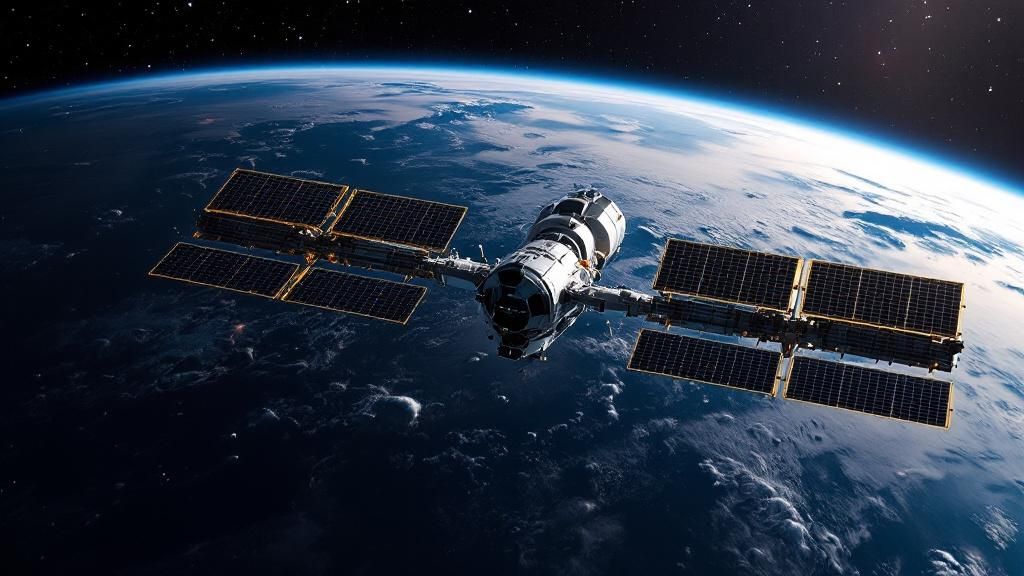
Nasa’s Artemis II mission has achieved entry into orbit, representing a significant achievement in humanity’s journey back to lunar exploration. Commander Reid Wiseman, pilot Victor Glover, mission specialist Christina Koch and lunar specialist Jeremy Hansen are currently orbiting Earth roughly 42,500 miles away aboard the newly crewed Orion spacecraft. The four astronauts launched on Wednesday in what represents a critical test mission before humans return to the Moon for the first time since the Apollo era. With the mission’s success hinging on thorough testing of the Orion vessel’s systems and the crew’s ability to function in the unforgiving environment of space, Nasa is taking no risks as it reinforces America’s leadership in the global space race.
The Crew’s First Hours in Zero Gravity
The initial hours aboard Orion were meticulously choreographed by Mission Control, with every minute tracked in the crew’s schedule. Following achieving orbit, pilot Victor Glover began putting the spacecraft to thorough tests, pushing the bus-like spacecraft to its limits to ensure it can safely transport humans into outer space. At the same time, the crew verified essential life support equipment and became acquainted with their environment. Just over eight hours into the mission, Commander Reid Wiseman radioed mission control requesting the crew’s “comfort garments” — their pyjamas — before the astronauts retreated to the sleeping area for their initial sleep period in space.
Sleeping in microgravity poses distinctive difficulties that astronauts must overcome to maintain their physical and mental wellbeing throughout long-duration missions. The crew need to strap themselves in purpose-built hanging sleep compartments to prevent drifting whilst asleep, a procedure that takes familiarisation and acclimatisation. Some astronauts report difficulty falling asleep as their bodies acclimate to weightlessness, whilst others note superior sleep experiences in space. The Artemis II crew will sleep approximately four-hour periods, totalling eight hours within each day, permitting Mission Control to preserve their strict operational schedule.
- Orion’s photovoltaic panels activated as planned, providing power for the journey
- Life support systems undergoing thorough testing by the crew
- Astronauts use custom-built suspended sleep systems in microgravity
- Crew allocated 30 minutes daily exercise to preserve skeletal strength
Assessing the Orion Spacecraft’s Capabilities
The Orion spacecraft, roughly the size of a minibus, represents humanity’s most advanced lunar exploration vessel to date. Pilot Victor Glover has spent the mission’s crucial initial hours subjecting the craft to exhaustive testing, confirming every system before the crew ventures into the harsh environment of deep space. The deployment of Orion’s solar wings immediately following launch proved successful, providing the vital power supply needed to maintain the spacecraft’s systems during the mission. This careful examination process is absolutely vital; once the crew departs from Earth orbit, there is no straightforward route home, making absolute confidence in the vessel’s reliability non-negotiable.
Never before has Orion carried human astronauts into space, making this first manned mission an extraordinarily significant milestone in spaceflight history. Every component, from the guidance systems to the propulsion mechanisms, must operate without fault under the harsh environment of space travel. The four-person crew systematically complete comprehensive checklists, monitoring instruments and confirming all onboard systems function properly. Their thorough evaluation of Orion’s performance during these opening hours provides Nasa engineers with crucial information, ensuring the spacecraft is genuinely voyage-worthy before the mission progresses deeper into the cosmos.
Vital Support Equipment and Emergency Protocols
The crew are conducting rigorous tests of Orion’s environmental control systems, which are essential for maintaining a breathable atmosphere and stable environmental conditions throughout the mission. These systems control oxygen supply, eliminate carbon dioxide, manage temperature and humidity, and keep the crew protected in the hostile vacuum of space. Every monitoring device and failsafe system must function perfectly, as any malfunction could compromise the mission’s success. Mission Control monitors these systems continuously from Earth, ready to respond immediately to any irregularities or unusual data that might occur.
Should an emergency occur, the astronauts are furnished with purpose-built extravehicular activity suits capable of supporting human life for around six days in isolation. These sophisticated suits deliver oxygen, thermal control, and shielding against radiation and micrometeorites. The crew have been thoroughly trained in crisis procedures and suit operations before launch, confirming they can act rapidly to any crisis. This multi-layered safety approach—combining sturdy onboard systems with crew protection equipment—represents Nasa’s steadfast commitment to crew survival.
Going About Your Day in Microgravity
Life aboard the Orion spacecraft presents distinctive difficulties that differ markedly from Earth-based existence. The crew must adapt to zero gravity whilst adhering to rigorous timetables that allow for every minute of their operation. Unlike the Apollo astronauts of the mid-twentieth century, this team enjoys access to extensive livestreaming capabilities, allowing the world to observe their operations in live. Cameras mounted above the crew’s heads capture them checking monitors, connecting with Mission Control, and executing critical spacecraft functions. This openness marks a significant shift in how humanity encounters space exploration, converting what was once a far-removed, secretive undertaking into something real and engaging for millions of spectators worldwide.
Sleep Patterns and Fitness Regimens
Sleep in the weightless environment requires substantial adjustment. The crew must strap themselves into purpose-built suspended sleep sacks to avoid moving around the cabin during their sleep sessions. Mission Control has scheduled approximately 8 hours of sleep per day-night cycle, broken into two four-hour sessions to sustain alertness and mental performance. Commander Reid Wiseman jokingly asked for his “comfort garments”—pyjamas—before retiring for the crew’s inaugural sleep period. Some astronauts find weightlessness highly disruptive to sleep patterns as their bodies adapt, whilst others report experiencing their best sleep ever in space.
Physical exercise is absolutely vital for maintaining muscle mass and bone density during prolonged weightlessness exposure. Mission Control has mandated thirty minutes of daily exercise for each crew member, a mandatory obligation that protects their physical wellbeing. Commanders Reid Wiseman and Victor Glover tested Orion’s “flywheel exercise device,” a compact apparatus roughly the size of carry-on luggage that enables various forms of exercise. Christina Koch and Jeremy Hansen were scheduled to use the equipment for rowing, squats, and deadlifts. This demanding exercise programme ensures the astronauts maintain sufficient physical conditioning throughout their mission and remain able to execute critical tasks.
Dining and Amenities On Board
The Orion spacecraft, around the size of a minibus, contains restricted yet vital facilities for sustaining human life during the mission. Galley and food storage facilities furnish the crew with carefully selected meals formulated to satisfy nutritional requirements whilst reducing waste and storage demands. Every item aboard has been meticulously planned and tested to ensure it performs dependably in the microgravity environment. The crew’s food needs are balanced against the spacecraft’s weight constraints and storage capacity, requiring careful logistical coordination by Nasa’s nutritionists and mission planners.
One particularly practical concern aboard Orion is the functioning of onboard sanitation facilities. The spacecraft’s waste disposal system has previously experienced malfunctions during space missions, raising understandable concerns amongst crew and engineers alike. Nasa engineers have implemented improvements and backup procedures to prevent similar failures during Artemis II. The crew receives specific training on using all onboard facilities in zero-gravity environments, where conventional bathroom operations become significantly more complicated. Maintaining dependable waste management systems remains an often-overlooked yet truly essential component of mission accomplishment and crew wellbeing.
The Crucial Moon Injection Burn Awaits
As Artemis II continues its early orbit around Earth, the crew and Mission Control are gearing up for one of the mission’s most critical manoeuvres: the lunar injection burn. This carefully computed engine burn will launch the spacecraft out of Earth’s orbit and establish a trajectory towards the Moon. The timing, length, and orientation of this burn are essential—any error in calculation could jeopardise the entire mission. Engineers have devoted considerable time to modelling every variable, accounting for fuel usage, air resistance, and vehicle performance. The four astronauts will keep close watch on systems as they approach this key turning point, knowing that this burn marks their threshold beyond which return becomes impossible into deep space.
The lunar injection burn demonstrates the remarkable complexity underlying what might look like standard space operations. Mission Control must synthesise data across numerous ground stations, verify spacecraft systems are working at maximum efficiency, and verify all crew members are equipped to handle the acceleration forces they’ll endure. Once ignited, the Orion spacecraft’s engines will thrust with great intensity, driving the vehicle beyond Earth’s gravitational influence. This manoeuvre changes Artemis II from an mission in Earth orbit into a actual Moon mission. Success here confirms decades of engineering work and paves the way for humanity’s journey back to the Moon, making this burn one of the most anticipated moments in the complete mission schedule.
- Lunar injection burn sends spacecraft out of Earth orbit toward the Moon’s trajectory
- Accurate timing and angle computations are critical to mission success
- Successful injection marks transition to deep space with no straightforward return path
What Awaits Beyond the Moon
Once Artemis II completes its lunar orbit insertion and breaks free from Earth’s gravitational pull, the crew will travel into uncharted territory for human spaceflight in more than five decades. The four astronauts will journey approximately 42,500 miles from Earth, pushing the limits of human exploration beyond anything achieved since the Apollo era. This voyage into the depths of space represents a significant change in humanity’s relationship with space travel—moving from missions in Earth orbit to genuine lunar voyages where rescue options become extremely restricted. The Orion spacecraft, never before flown with humans aboard, will be extensively evaluated in the harsh environment of deep space, where exposure to radiation and isolation present unprecedented challenges for the contemporary astronauts.
The operational outline calls for the spacecraft to orbit the Moon in a far-reaching retrograde path, allowing the crew to experience lunar gravity’s pull whilst maintaining a secure separation from the lunar surface. This carefully planned trajectory enables Nasa to obtain essential information about Orion’s capabilities in deep space whilst keeping the astronauts within reach of contingency rescue efforts, albeit with significant difficulty. The crew will perform experimental studies, evaluate life support systems under extreme conditions, and gather information that will directly inform future crewed lunar landings. Every moment away from Earth’s protective field contributes critical understanding to humanity’s enduring goals of creating sustainable lunar exploration and eventually travelling to Mars.
